
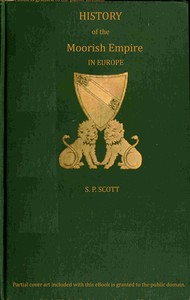
History of the Moorish Empire in Europe, Vol. 3 (of 3) by S. P. Scott
Forget the simple textbook version. History of the Moorish Empire in Europe, Vol. 3 picks up after the fall of Granada, the last Muslim kingdom in Spain. The 'Reconquista' is over, but the story is far from finished. This volume charts the grim century that follows, where the victorious Spanish monarchs, Ferdinand and Isabella and their successors, grapple with a massive population they've conquered but don't trust.
The Story
This isn't a plot about kings and queens, but about a people caught in a trap. The Moors who stayed became 'Moriscos,' legally Christian but culturally Muslim and Jewish in private. The book tracks the escalating pressure on them: first came laws against their dress and language, then forced conversions, and constant surveillance by the Inquisition. You see their desperate, failed revolts in the mountains, and finally, the political decision that 'solving' the Morisco problem meant removing them entirely. Scott details the logistical nightmare and human tragedy of expelling over 300,000 people from 1609 to 1614, scattering them across North Africa and the Ottoman Empire, where many were no longer welcome. It's the final, devastating erasure of an 800-year-old culture from the Iberian Peninsula.
Why You Should Read It
Scott wrote this over a century ago, but his narrative has a shocking urgency. He paints vivid pictures of communities trying to hold on to their identity under relentless persecution. What got me was the complexity—this isn't a simple tale of good vs. evil. You see the fear and paranoia on the Spanish side, the internal divisions among the Moriscos, and the sheer human cost of a policy meant to create unity by enforcing purity. It makes you think about assimilation, tolerance, and what we lose when a culture is forcibly dismantled. Reading this final volume, you understand the deep, lasting scars this period left on Spain, and by extension, on the modern world.
Final Verdict
This is a must-read for anyone who thinks they know the story of medieval Spain. It's perfect for readers who love deep-dive history that focuses on the human experience behind the big events. Be warned, it's not a light read—the subject matter is heavy—but it is a profoundly important one. If you've read the first two volumes, this concluding piece is essential. If you're jumping in here, Scott provides enough context to follow along, and you'll likely find yourself hunting down the earlier books to get the full, magnificent, and tragic picture.
No rights are reserved for this publication. Knowledge should be free and accessible.




Emily Jones
2 years agoHaving followed this topic for years, I can say that the way it handles controversial points with balance is quite professional. A trustworthy resource that I'll keep in my digital library.