About 303 minutes
Two Sides of the Face: Midwinter Tales — Themes and Context
Time Travel Speculative Futures
69,464 recorded words. 6 minutes difference from this book's estimate.
View Gutenberg source #22198
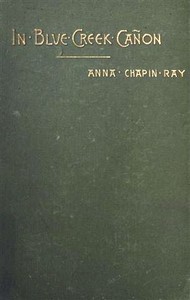
In Blue Creek Cañon — Key Ideas to Explore can be approached with a clearer sense of reading commitment from its source measurements: 68,104 words, 4 hr 57 min estimated reading time, and 6 detected text sections.
The text analysis averages about 18.8 words per sentence, while the detected sections provide another way to judge how the source is divided.
Project Gutenberg metadata also associates the work with “Family life -- Fiction,” connecting these edition facts with the source record’s subject description.
Explore this collection
These alternatives are selected using recorded categories and estimated reading time.
About 303 minutes
Time Travel Speculative Futures
69,464 recorded words. 6 minutes difference from this book's estimate.
View Gutenberg source #22198About 270 minutes
Time Travel Speculative Futures
62,039 recorded words. 27 minutes difference from this book's estimate.
View Gutenberg source #22357About 328 minutes
Time Travel Speculative Futures
75,369 recorded words. 31 minutes difference from this book's estimate.
View Gutenberg source #22249Search stored excerpts and compare books → Choose by your preferences →
Choices use stored catalog measurements. Estimates vary with reading speed. A shared category is a catalog label, not a claim that two books have the same argument or literary quality.
Search reads excerpt text stored with this catalog and links to its associated Gutenberg record. The connection is stored in the site database; this tool does not recheck that every excerpt is word-for-word identical to that external record. Excerpt search does not cover every chapter and does not verify historical publication dates.
Catalog snapshot checked: 2026-09-26. Coverage: 94 public books, 94 available source excerpts.
Calculated from edition completeness, EPUB availability, text structure and catalogue metadata. Not a user rating.
Total of 100 points, scaled to a 2.5-5.0 range. Editions with an empty description or a missing EPUB file are not scored.
Public-domain source text
The source text is kept in the dedicated reader, separate from this catalogue record and its commentary.
The novel opens with a vivid tableau: four children skating on a frozen lake in a Montana mining town, enveloped by smoke from a smelter. The setting is immediately specific—the cañon, the mountains, the willow-bordered creek—and the dialogue reveals a close-knit group accustomed to teasing and mishaps. Ned’s prank with a sewing basket and Allie’s retaliation with a button establish a tone of affectionate rivalry. The excerpts then shift to a gulch walk, where the narrator describes the town’s barren streets and the cool relief of the pines, hinting at the contrast between domestic and wild spaces that will shape the story.
The first chapter, “A Council on Skates,” plunges readers into a specific time and place. The strong southeast wind, the “dense yellow smoke” from the smelter, and the “dazzling ice” of the lake are rendered in concrete detail. The dialogue is brisk and natural: Ned complains about the smoke, Allie worries about snow spoiling the ice, and their banter reveals character through action—Ned’s trick with the basket, Allie’s quick retaliation. The opening lines from Oliver Wendell Holmes, advising to “stick to each other through thick and thin,” serve as a thematic epigraph. A first reader should note how the physical environment—the cañon, the smelter, the ice—is not just backdrop but active presence, shaping the children’s play and concerns.
The excerpts move from the ice to the Burnam home, where Mrs. Burnam invites the children to stop by later. The domestic space is lightly sketched but significant: Allie’s sewing basket, Ned’s mention of Cousin Euphemia’s ginger-tea remedy, and the casual invitation to “come along too” suggest a community where households are open and adults are peripheral but watchful. The narrator’s description of the town’s layout—numbered streets, empty lots, the schoolhouse on the boundary—implies a place in transition, raw and unfinished. For a first reading, these details build a sense of a small, interconnected society where private homes and public spaces overlap, and where the children’s adventures will likely be observed and commented upon by the adults.
The walk up the gulch offers a deliberate contrast to the town. After the “burning glare on the dry, sandy soil,” the “cool shadows of the pines” provide relief. The narrator notes the gulch’s multiple names—Bear Gulch, Lover’s Gulch, Cemetery Gulch—each hinting at different uses and dangers. The children pick their way among “countless tin cans,” walk the rails, and leap over cattle-guards, their play underscoring the rough, industrial edge of their environment. Ned’s sudden “violent twitch” and exclamation “Look back!” introduces a moment of alarm, though the excerpt cuts off. A first reader should watch for how this gulch, with its layered associations, becomes a site of both adventure and peril later in the novel.
Anna Chapin Ray’s prose is efficient and observant, favoring action and dialogue over interior reflection. The narrative voice shifts between close third-person (following the children’s perceptions) and a more detached, descriptive tone (as in the gulch’s geography). The pacing is brisk: scenes change from ice to home to walk without lengthy transitions. The excerpts show a preference for concrete nouns—smoke, ice, tin cans, wood-piles—and verbs of motion: darting, clambering, trudging. For a first reading, this rhythm suggests a story driven by external events and physical movement, where character is revealed through what characters do and say rather than what they think. The incomplete excerpt at the gulch’s climax leaves a question hanging, inviting the reader to continue.
These early excerpts establish a world where the natural and industrial coexist, where children navigate both the freedoms of outdoor play and the constraints of domestic life. The opening’s emphasis on setting and social interplay prepares readers for a story that likely balances adventure with family dynamics. As you read, pay attention to how the gulch and the cañon recur, and whether the opening epigraph’s call for loyalty proves prescient.
That first chapter of In Blue Creek Cañon stayed with me—the way the frozen creek and quiet parlors said so much without anyone speaking. It reminded me how places can hold a story’s heartbeat. I felt something similar lingering after That Affair Next Door — Story, Setting & Ideas, where the house itself seems to whisper what the characters won’t. Some books just leave that gentle echo.
Create a short personal record of your experience with this book.