
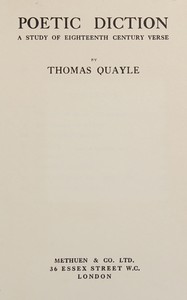
Poetic diction: A study of eighteenth century verse by Thomas Quayle
Let's be honest, a book with 'Poetic Diction' in the title doesn't exactly scream 'page-turner.' But Thomas Quayle's study from 1924 is a surprisingly clear and focused guide to a very specific literary moment. He's not trying to cover all of poetry forever. Instead, he zeroes in on the 18th century—the Age of Pope and Johnson—and asks a simple question: what made the language of their poetry tick?
The Story
There's no plot here, but there is a clear journey. Quayle starts by showing us what poetic diction is—the special, often elevated vocabulary poets use. Then, he walks us through how 18th-century poets built their own version of it. He looks at their love for Latin-derived words, their preference for general terms over specific ones (saying 'finny tribe' instead of 'fish'), and their drive for balance and harmony in every line. He compares their choices to the wilder, more concrete language of earlier poets like Shakespeare and the more personal, emotional language that would come with the Romantics. The 'story' is how a group of writers, influenced by their classical education and their ideas about reason and society, crafted a shared voice for poetry.
Why You Should Read It
This book changed how I read. Before, I'd skim an 18th-century poem and just accept its formality as a given. Quayle made me see the craft behind it. He points out patterns I never noticed, like how often these poets avoid simple Anglo-Saxon words in favor of fancier Latinate ones to create a tone of dignified authority. It’s not dry analysis; it’s like having a sharp-eyed friend point over your shoulder and say, 'See that word? Look what it’s doing. Now look at this line from fifty years earlier. Totally different, right?' He gives you the tools to appreciate the deliberate artistry in poems that can sometimes feel stiff to modern eyes.
Final Verdict
This is a niche book, but a brilliant one for the right reader. It's perfect for literature students, aspiring poets curious about craft, or any serious reader who wants to understand the 'how' behind the words on the page. If you love digging into the mechanics of writing, you'll find it fascinating. It’s not a casual beach read, but it’s also not an impenetrable academic text. Think of it as a masterclass focused on one specific, influential period. If you have a favorite 18th-century poem, reading Quayle will make you see it in a whole new light.
There are no legal restrictions on this material. Distribute this work to help spread literacy.
Ashley Thompson
10 months agoIf you're tired of surface-level information, the footnotes provide extra depth for those who want to dig deeper. This is a solid reference for both beginners and experts.
Donald Harris
1 year agoI was skeptical about the depth of this book at first, but the way it handles controversial points with balance is quite professional. Definitely a five-star contribution to the field.
David Martin
1 month agoExceptional clarity on a very complex subject.
Donald Hernandez
7 months agoBefore I started my latest project, I read this and the way it challenges the status quo is both daring and well-supported. I am looking forward to the author's next publication.

Christopher Lopez
3 months agoThis is now a staple reference in my professional collection.