About 162 minutes
A True Hero: A Story of the Days of William Penn — Story, Setting & Ideas
Historical Psychological Social Fiction
37,067 recorded words. 12 minutes difference from this book's estimate.
View Gutenberg source #21492
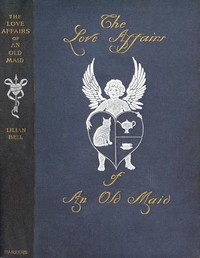
Before opening The Love Affairs of an Old Maid — Reading Companion, the edition data offers a quick orientation: 39,968 words, 2 hr 54 min estimated reading time, and 4 detected text sections.
The text analysis averages about 16.8 words per sentence, while the detected sections provide another way to judge how the source is divided.
Project Gutenberg metadata also associates the work with “Single women -- Fiction,” connecting these edition facts with the source record’s subject description.
Explore this collection
These alternatives are selected using recorded categories and estimated reading time.
About 162 minutes
Historical Psychological Social Fiction
37,067 recorded words. 12 minutes difference from this book's estimate.
View Gutenberg source #21492About 194 minutes
Historical Psychological Social Fiction
44,537 recorded words. 20 minutes difference from this book's estimate.
View Gutenberg source #21540About 208 minutes
Historical Psychological Social Fiction
47,736 recorded words. 34 minutes difference from this book's estimate.
View Gutenberg source #21834Search stored excerpts and compare books → Choose by your preferences →
Choices use stored catalog measurements. Estimates vary with reading speed. A shared category is a catalog label, not a claim that two books have the same argument or literary quality.
Search reads excerpt text stored with this catalog and links to its associated Gutenberg record. The connection is stored in the site database; this tool does not recheck that every excerpt is word-for-word identical to that external record. Excerpt search does not cover every chapter and does not verify historical publication dates.
Catalog snapshot checked: 2026-09-26. Coverage: 94 public books, 94 available source excerpts.
Calculated from edition completeness, EPUB availability, text structure and catalogue metadata. Not a user rating.
Total of 100 points, scaled to a 2.5-5.0 range. Editions with an empty description or a missing EPUB file are not scored.
Public-domain source text
The source text is kept in the dedicated reader, separate from this catalogue record and its commentary.
Lilian Bell opens her 1893 novel with a preface that directly challenges the stigma attached to the term "old maid," arguing that language itself shapes social fate. The narrator, an unmarried woman, recounts her "love affairs" through a series of letters and reflections, blending sharp social observation with personal confession. The excerpted passage—a scene involving a mistaken rice-throwing and a basket of flowers on a train—reveals Bell's skill at using public embarrassment to expose the gap between how events appear and how they are felt. The narrator's blush and her impulse to cry while others laugh establish a voice that is both self-aware and vulnerable.
The narrator's voice is the novel's most distinctive feature. In the preface, Bell writes in her own person, defending the unmarried woman's right to a dignified label. But once the story begins, the narrator adopts a tone of rueful irony. She describes being pelted with rice and receiving a basket of doves as a "nail driven into my coffin," a metaphor that mixes comedy with genuine distress. The voice is confiding and intimate, often addressing a friend named Ruth directly. This epistolary quality gives the reader access to the narrator's inner calculations—she admits to feeling "more like crying" while her companion Frankie laughs, and later confesses that she "couldn't stand it to see the girl I loved cry." The prose moves between colloquial outbursts and more measured reflection, creating a rhythm that mirrors the narrator's fluctuating confidence.
Bell repeatedly stages scenes in which the narrator's private feelings are exposed to a watching crowd. The train episode is the most elaborate: the rice shower, the laughter of passengers, the conspicuous basket of flowers—all force the narrator into a role she did not choose. She notes that "everybody in the car roared" and that she felt "amusing more people than I had bargained for." The doves, which she jerks off and throws out the window, become a symbol of her powerlessness to control how she is seen. Later, the narrator describes her fiancée Louise's "absolute faith" as a burden: "Her faith in me makes me shiver." These moments suggest a persistent tension between the narrator's inner uncertainty and the fixed expectations others hold of her. Bell uses the train car as a microcosm of society, where every gesture is read and judged.
Bell's characters speak a language of courtship that is both elaborate and hollow. The narrator's friend Brian sends a basket with turtle-doves, a conventional romantic gesture that the narrator finds grotesque—"those sickening birds." The rice, meant to suggest a wedding, lands on her as a humiliation. Even the narrator's own vocabulary reflects her unease: she calls her engagement a "coffin" and describes herself as a "cur." The men in the excerpt—Brian Beck and the unseen Norris Whitehouse—are sketched through their actions rather than their words, while the women (Frankie, Louise) are defined by their emotional responses. Bell's dialogue and narration alike are marked by a preference for the concrete over the abstract: a basket is "as big as a billiard-table," a laugh is "roared." This sensory specificity grounds the novel's social commentary in felt experience.
Readers should attend to the way Bell's narrator shifts between direct address and reported speech, and to the recurring motif of misreading—both by others and by the narrator herself. The novel's title promises love affairs, but the excerpts suggest that the real subject is the difficulty of being seen accurately. Pay particular attention to the letters within the narrative: they often contain the sharpest observations about the gap between what people say and what they mean.
Reading The Love Affairs of an Old Maid brought back an afternoon at my grandmother’s, where I found her old copy of How Doth the Simple Spelling Bee — A Closer Reading. Both books speak in that same quiet, knowing way about the chasm between what we show and what we hold inside—her margin notes felt like a hand on my shoulder.
A brief reflection can help important ideas stay with you longer.