About 501 minutes
Lavengro — Story, Setting & Ideas
Historical Psychological Social Fiction
115,041 recorded words. 19 minutes difference from this book's estimate.
View Gutenberg source #22877
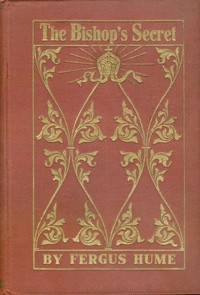
This digital edition of The Bishop's Secret — Reading Notes is described by source-level measurements including 119,417 words, 8 hr 40 min estimated reading time, and 11 detected text sections.
The text analysis averages about 17.3 words per sentence, while the detected sections provide another way to judge how the source is divided.
Project Gutenberg metadata also associates the work with “Detective and mystery stories,” connecting these edition facts with the source record’s subject description.
Explore this collection
These alternatives are selected using recorded categories and estimated reading time.
About 501 minutes
Historical Psychological Social Fiction
115,041 recorded words. 19 minutes difference from this book's estimate.
View Gutenberg source #22877About 463 minutes
Historical Psychological Social Fiction
106,322 recorded words. 57 minutes difference from this book's estimate.
View Gutenberg source #21893About 375 minutes
Historical Psychological Social Fiction
86,134 recorded words. 145 minutes difference from this book's estimate.
View Gutenberg source #24140Search stored excerpts and compare books → Choose by your preferences →
Choices use stored catalog measurements. Estimates vary with reading speed. A shared category is a catalog label, not a claim that two books have the same argument or literary quality.
Search reads excerpt text stored with this catalog and links to its associated Gutenberg record. The connection is stored in the site database; this tool does not recheck that every excerpt is word-for-word identical to that external record. Excerpt search does not cover every chapter and does not verify historical publication dates.
Catalog snapshot checked: 2026-09-26. Coverage: 94 public books, 94 available source excerpts.
Calculated from edition completeness, EPUB availability, text structure and catalogue metadata. Not a user rating.
Total of 100 points, scaled to a 2.5-5.0 range. Editions with an empty description or a missing EPUB file are not scored.
Public-domain source text
The source text is kept in the dedicated reader, separate from this catalogue record and its commentary.
The novel opens not with a crime but with a clerical gathering, introducing Bishop Pendle as a man visibly 'out of sorts' before any secret is revealed. The preface promises a 'broadening out' of character types, and the early chapters deliver: the chaplain Cargrim is a scheming observer, Mrs. Pansey a shrewish chorus, and the gypsy Mother Jael a fortune-teller whose tent becomes a hub of intrigue. Hume's cathedral setting is rendered with Trollopian detail, but the tone is sharper, more suspicious.
The first excerpt shows Cargrim maneuvering through a fête, blocked by admirers and a pedantic dean. His goal: to bring the bishop into contact with Mother Jael. This early scene establishes the novel's engine—not action but surveillance, not confession but eavesdropping. The secret is hinted at, not stated, and the reader is placed alongside Cargrim, watching for clues.
The opening chapters introduce a cast defined by their roles as observers. Cargrim, the poor protégé, is described as 'artful' and 'watchful,' his movements impeded by his own popularity. He studies the bishop's behavior, hoping to gather 'useful information.' Dean Alder, meanwhile, dispenses Latin quotations and dry coughs, a figure of learned irrelevance. Even Daisy Norsham, the gushing young lady, is a watcher of sorts—she notes the bishop's health and reports Mother Jael's prophecies.
This network of watchers creates a claustrophobic atmosphere. No one speaks directly; everything is filtered through gossip, quotation, or sidelong glances. The reader is drawn into this web, forced to interpret motives from small gestures. When Cargrim notes that the bishop 'appears to be sadly out of sorts,' the phrase carries weight beyond its surface meaning. The novel's mystery is not just a secret but the social machinery that surrounds it.
Bishop Pendle is introduced through others' observations before he speaks. Dean Alder notes he is 'sadly out of sorts'; Cargrim sees him 'conversing with Miss Whichello' but cannot reach him. The bishop's physical state—his visible strain—is the novel's first clue. He is a man under pressure, and the source of that pressure is the secret of the title.
The excerpts do not reveal what the secret is, but they show its effects. The bishop is a figure of authority whose composure is cracking. Hume uses the cathedral setting to heighten this contrast: the bishop should be serene, but he is not. The reader's task is to watch for the moments when the mask slips. The early chapters train us to read faces and pauses, not just dialogue.
Mother Jael, the gypsy fortune-teller, appears only in report during the opening excerpts, but her presence looms. Daisy Norsham recounts her prophecy of 'marriage and money,' and Cargrim schemes to bring the bishop to her tent. The gypsy represents a world outside the cathedral's control—superstitious, unpredictable, and potentially revealing.
Hume uses the fortune-telling motif to introduce the idea of hidden knowledge. Mother Jael 'tells the truth,' according to Daisy, and her tent is a space where secrets might be spoken. The novel's structure hinges on such encounters: the bishop's secret is not just a fact but a thing that can be discovered, guessed, or blurted out. The gypsy is a wild card in a game of clerical chess.
Hume's style in these early chapters is notable for what it withholds. The secret is never named; the bishop's distress is shown, not explained. Dialogue is layered with subtext: Daisy's chatter about Nauheim and Wiesbaden, the dean's pedantic interruptions, Cargrim's polite evasions. Every exchange circles around the central mystery without touching it.
This indirection is the novel's method. The reader must piece together the truth from fragments—a glance, a hesitation, a quoted line of Latin. The preface promises a 'stirring, ingenious, misleading' plot, and the opening delivers on that promise by making the reader complicit in the search. We are, like Cargrim, watchful and artful, waiting for the secret to surface.
As you read, pay attention to who is watching whom. The novel's tension comes less from action than from the constant pressure of observation. Every character has a motive for knowing the bishop's secret, and every conversation is a potential trap. The excerpts offer only the first threads of a complex weave; the full pattern emerges only as the watchers themselves become the watched.
Rain came down hard that afternoon, and I kept returning to Bishop Pendle’s guarded silences, how a single secret can hollow a man. Later, leafing through my notes, I stumbled onto something quieter—a different kind of distance, less ecclesiastical, more human. It pulled me in without my noticing, like the rain itself. "A Soldier Of The Empire" — A Closer Reading stayed with me long after the clouds broke.
Capture what you thought, learned, and would like to remember.